Nicholas Carlini is an American researcher affiliated with Anthropic and previously with Google DeepMind who has published research in the fields of computer security and machine learning. He is known for his work on adversarial machine learning, particularly his work on the Carlini & Wagner attack in 2016. This attack was particularly useful in defeating defensive distillation, a method used to increase model robustness, and has since been effective against other defenses against adversarial input. In 2018, Carlini demonstrated an attack on Mozilla's DeepSpeech model, showing that hidden commands could be embedded in speech inputs, which the model would execute even if they were inaudible to humans. He also led a team at UC Berkeley that successfully broke seven out of nine defenses against adversarial attacks presented at the 2018 International Conference on Learning Representations. In addition to his work on adversarial attacks, Carlini has made significant contributions to understanding the privacy risks of machine learning models. In 2020, he revealed that large language models, like GPT-2, could memorize and output personally identifiable information. His research demonstrated that this issue worsened with larger models, and he later showed similar vulnerabilities in generative image models, such as Stable Diffusion. == Life and career == Nicholas Carlini obtained his Bachelor of Arts in Computer Science and Mathematics from the University of California, Berkeley, in 2013. He then continued his studies at the same university, where he pursued a PhD under the supervision of David Wagner, completing it in 2018. Carlini became known for his work on adversarial machine learning. In 2016, he worked alongside Wagner to develop the Carlini & Wagner attack, a method of generating adversarial examples against machine learning models. The attack was proved to be useful against defensive distillation, a popular mechanism where a student model is trained based on the features of a parent model to increase the robustness and generalizability of student models. The attack gained popularity when it was shown that the methodology was also effective against most other defenses, rendering them ineffective. In 2018, Carlini demonstrated an attack against Mozilla Foundation's DeepSpeech model where he showed that by hiding malicious commands inside normal speech input the speech model would respond to the hidden commands even when the commands were not discernible by humans. In the same year, Carlini and his team at UC Berkeley showed that out of the 11 papers presenting defenses to adversarial attacks accepted in that year's ICLR conference, seven of the defenses could be broken. Since 2021, he and his team have been working on large language models, creating a questionnaire where humans typically scored 35% whereas AI models scored in the 40%, with GPT-3 getting 38% which could be improved to 40% through few shot prompting. The best performer in the test was UnifiedQA, a model developed by Google specifically for answer questions and answer sets. Carlini has also developed methods to cause large language models like ChatGPT to answer harmful questions like how to construct bombs. He is also known for his work studying the privacy of machine learning models. In 2020, he showed for the first time that large language models would memorize some of the text data that they were trained on. For example, he found that GPT-2 could output personally identifiable information. He then led an analysis of larger models and studied how memorization increased with model size. Then, in 2022 he showed the same vulnerability in generative image models, and specifically diffusion models, by showing that Stable Diffusion could output images of people's faces that it was trained on. Following on this, Carlini then showed that ChatGPT would also sometimes output exact copies of webpages it was trained on, including personally identifiable information. Some of these studies have since been referenced by the courts in debating the copyright status of AI models. == Other work == Carlini received the Best of Show award at the 2020 IOCCC for implementing a tic-tac-toe game entirely with calls to printf, expanding on work from a research paper of his from 2015. The judges commented on his submission "This year's Best of Show (carlini) is such a novel way of obfuscation that it would be worth of a special mention in the (future) Best of IOCCC list!". [sic] == Awards == Best Student Paper Award, IEEE S&P 2017 ("Towards Evaluating the Robustness of Neural Networks") Best Paper Award, ICML 2018 ("Obfuscated Gradients Give a False Sense of Security: Circumventing Defenses to Adversarial Examples") Distinguished Paper Award, USENIX 2021 ("Poisoning the Unlabeled Dataset of Semi-Supervised Learning") Distinguished Paper Award, USENIX 2023 ("Tight Auditing of Differentially Private Machine Learning") Best Paper Award, ICML 2024 ("Stealing Part of a Production Language Model") Best Paper Award, ICML 2024 ("Considerations for Differentially Private Learning with Large-Scale Public Pretraining")
Eugene Goostman
Eugene Goostman is a chatbot that some regard as having passed the Turing test, a test of a computer's ability to communicate indistinguishably from a human. Developed in Saint Petersburg in 2001 by a group of three programmers, the Russian-born Vladimir Veselov, Ukrainian-born Eugene Demchenko, and Russian-born Sergey Ulasen, Goostman is portrayed as a 13-year-old Ukrainian boy—characteristics that are intended to induce forgiveness in those with whom it interacts for its grammatical errors and lack of general knowledge. The Goostman bot has competed in a number of Turing test contests since its creation, and finished second in the 2005 and 2008 Loebner Prize contest. In June 2012, at an event marking what would have been the 100th birthday of the test's author, Alan Turing, Goostman won a competition promoted as the largest-ever Turing test contest, in which it successfully convinced 29% of its judges that it was human. On 7 June 2014, at a contest marking the 60th anniversary of Turing's death, 33% of the event's judges thought that Goostman was human; the event's organiser Kevin Warwick considered it to have passed Turing's test as a result, per Turing's prediction in his 1950 paper "Computing Machinery and Intelligence", that by the year 2000, machines would be capable of fooling 30% of human judges after five minutes of questioning. The validity and relevance of the announcement of Goostman's pass was questioned by critics, who noted the exaggeration of the achievement by Warwick, the bot's use of personality quirks and humour in an attempt to misdirect users from its non-human tendencies and lack of real intelligence, along with "passes" achieved by other chatbots at similar events. == Personality == Eugene Goostman is portrayed as being a 13-year-old boy from Odesa, Ukraine, who has a pet guinea pig and a father who is a gynaecologist. Veselov stated that Goostman was designed to be a "character with a believable personality". The choice of age was intentional, as, in Veselov's opinion, a thirteen-year-old is "not too old to know everything and not too young to know nothing". Goostman's young age also induces people who "converse" with him to forgive minor grammatical errors in his responses. In 2014, work was made on improving the bot's "dialog controller", allowing Goostman to output more human-like dialogue. A conversation between Scott Aaronson and Eugene Goostman ran as follows: == Competitions == Eugene Goostman has competed in a number of Turing test competitions, including the Loebner Prize contest; it finished joint second in the Loebner test in 2001, and came second to Jabberwacky in 2005 and to Elbot in 2008. On 23 June 2012, Goostman won a Turing test competition at Bletchley Park in Milton Keynes, held to mark the centenary of its namesake, Alan Turing. The competition, which featured five bots, twenty-five hidden humans, and thirty judges, was considered to be the largest-ever Turing test contest by its organizers. After a series of five-minute-long text conversations, 29% of the judges were convinced that the bot was an actual human. === 2014 "pass" === On 7 June 2014, in a Turing test competition at the Royal Society, organised by Kevin Warwick of the University of Reading to mark the 60th anniversary of Turing's death, Goostman won after 33% of the judges were convinced that the bot was human. 30 judges took part in the event, which included Lord Sharkey, a sponsor of Turing's posthumous pardon, artificial intelligence Professor Aaron Sloman, Fellow of the Royal Society Mark Pagel and Red Dwarf actor Robert Llewellyn. Each judge partook in a textual conversation with each of the five bots; at the same time, they also conversed with a human. In all, a total of 300 conversations were conducted. In Warwick's view, this made Goostman the first machine to pass a Turing test. In a press release, he added that: Some will claim that the Test has already been passed. The words Turing Test have been applied to similar competitions around the world. However this event involved more simultaneous comparison tests than ever before, was independently verified and, crucially, the conversations were unrestricted. A true Turing Test does not set the questions or topics prior to the conversations. In his 1950 paper "Computing Machinery and Intelligence", Turing predicted that by the year 2000, computer programs would be sufficiently advanced that the average interrogator would, after five minutes of questioning, "not have more than 70 per cent chance" of correctly guessing whether they were speaking to a human or a machine. Although Turing phrased this as a prediction rather than a "threshold for intelligence", commentators believe that Warwick had chosen to interpret it as meaning that if 30% of interrogators were fooled, the software had "passed the Turing test". ==== Reactions ==== Warwick's claim that Eugene Goostman was the first ever chatbot to pass a Turing test was met with scepticism; critics acknowledged similar "passes" made in the past by other chatbots under the 30% criteria, including PC Therapist in 1991 (which tricked 5 of 10 judges, 50%), and at the Techniche festival in 2011, where a modified version of Cleverbot tricked 59.3% of 1334 votes (which included the 30 judges, along with an audience). Cleverbot's developer, Rollo Carpenter, argued that Turing tests can only prove that a machine can "imitate" intelligence rather than show actual intelligence. Gary Marcus was critical of Warwick's claims, arguing that Goostman's "success" was only the result of a "cleverly-coded piece of software", going on to say that "it's easy to see how an untrained judge might mistake wit for reality, but once you have an understanding of how this sort of system works, the constant misdirection and deflection becomes obvious, even irritating. The illusion, in other words, is fleeting." While acknowledging IBM's Deep Blue and Watson projects—single-purpose computer systems meant for playing chess and the quiz show Jeopardy! respectively—as examples of computer systems that show a degree of intelligence in their specialised field, he further argued that they were not an equivalent to a computer system that shows "broad" intelligence, and could—for example, watch a television programme and answer questions on its content. Marcus stated that "no existing combination of hardware and software can learn completely new things at will the way a clever child can." However, he still believed that there were potential uses for technology such as that of Goostman, specifically suggesting the creation of "believable", interactive video game characters. Imperial College London professor Murray Shanahan questioned the validity and scientific basis of the test, stating that it was "completely misplaced, and it devalues real AI research. It makes it seem like science fiction AI is nearly here, when in fact it's not and it's incredibly difficult." Mike Masnick, editor of the blog Techdirt, was also skeptical, questioning publicity blunders such as the five chatbots being referred to in press releases as "supercomputers", and saying that "creating a chatbot that can fool humans is not really the same thing as creating artificial intelligence."
Iterative reconstruction
Iterative reconstruction refers to iterative algorithms used to reconstruct 2D and 3D images in certain imaging techniques. For example, in computed tomography an image must be reconstructed from projections of an object. Here, iterative reconstruction techniques are usually a better, but computationally more expensive alternative to the common filtered back projection (FBP) method, which directly calculates the image in a single reconstruction step. In recent research works, scientists have shown that extremely fast computations and massive parallelism is possible for iterative reconstruction, which makes iterative reconstruction practical for commercialization. == Basic concepts == The reconstruction of an image from the acquired data is an inverse problem. Often, it is not possible to exactly solve the inverse problem directly. In this case, a direct algorithm has to approximate the solution, which might cause visible reconstruction artifacts in the image. Iterative algorithms approach the correct solution using multiple iteration steps, which allows to obtain a better reconstruction at the cost of a higher computation time. There are a large variety of algorithms, but each starts with an assumed image, computes projections from the image, compares the original projection data and updates the image based upon the difference between the calculated and the actual projections. === Algebraic reconstruction === The Algebraic Reconstruction Technique (ART) was the first iterative reconstruction technique used for computed tomography by Hounsfield. === Iterative Sparse Asymptotic Minimum Variance === The iterative sparse asymptotic minimum variance algorithm is an iterative, parameter-free superresolution tomographic reconstruction method inspired by compressed sensing, with applications in synthetic-aperture radar, computed tomography scan, and magnetic resonance imaging (MRI). === Statistical reconstruction === There are typically five components to statistical iterative image reconstruction algorithms, e.g. An object model that expresses the unknown continuous-space function f ( r ) {\displaystyle f(r)} that is to be reconstructed in terms of a finite series with unknown coefficients that must be estimated from the data. A system model that relates the unknown object to the "ideal" measurements that would be recorded in the absence of measurement noise. Often this is a linear model of the form A x + ϵ {\displaystyle \mathbf {A} x+\epsilon } , where ϵ {\displaystyle \epsilon } represents the noise. A statistical model that describes how the noisy measurements vary around their ideal values. Often Gaussian noise or Poisson statistics are assumed. Because Poisson statistics are closer to reality, it is more widely used. A cost function that is to be minimized to estimate the image coefficient vector. Often this cost function includes some form of regularization. Sometimes the regularization is based on Markov random fields. An algorithm, usually iterative, for minimizing the cost function, including some initial estimate of the image and some stopping criterion for terminating the iterations. === Learned Iterative Reconstruction === In learned iterative reconstruction, the updating algorithm is learned from training data using techniques from machine learning such as convolutional neural networks, while still incorporating the image formation model. This typically gives faster and higher quality reconstructions and has been applied to CT and MRI reconstruction. == Advantages == The advantages of the iterative approach include improved insensitivity to noise and capability of reconstructing an optimal image in the case of incomplete data. The method has been applied in emission tomography modalities like SPECT and PET, where there is significant attenuation along ray paths and noise statistics are relatively poor. Statistical, likelihood-based approaches: Statistical, likelihood-based iterative expectation-maximization algorithms are now the preferred method of reconstruction. Such algorithms compute estimates of the likely distribution of annihilation events that led to the measured data, based on statistical principle, often providing better noise profiles and resistance to the streak artifacts common with FBP. Since the density of radioactive tracer is a function in a function space, therefore of extremely high-dimensions, methods which regularize the maximum-likelihood solution turning it towards penalized or maximum a-posteriori methods can have significant advantages for low counts. Examples such as Ulf Grenander's Sieve estimator or Bayes penalty methods, or via I.J. Good's roughness method may yield superior performance to expectation-maximization-based methods which involve a Poisson likelihood function only. As another example, it is considered superior when one does not have a large set of projections available, when the projections are not distributed uniformly in angle, or when the projections are sparse or missing at certain orientations. These scenarios may occur in intraoperative CT, in cardiac CT, or when metal artifacts require the exclusion of some portions of the projection data. In Magnetic Resonance Imaging it can be used to reconstruct images from data acquired with multiple receive coils and with sampling patterns different from the conventional Cartesian grid and allows the use of improved regularization techniques (e.g. total variation) or an extended modeling of physical processes to improve the reconstruction. For example, with iterative algorithms it is possible to reconstruct images from data acquired in a very short time as required for real-time MRI (rt-MRI). In Cryo Electron Tomography, where the limited number of projections are acquired due to the hardware limitations and to avoid the biological specimen damage, it can be used along with compressive sensing techniques or regularization functions (e.g. Huber function) to improve the reconstruction for better interpretation. Here is an example that illustrates the benefits of iterative image reconstruction for cardiac MRI.
Framebuffer
A framebuffer (frame buffer, or sometimes framestore) is a portion of random-access memory (RAM) containing a bitmap that drives a video display. It is a memory buffer containing data representing all the pixels in a complete video frame. Modern video cards contain framebuffer circuitry in their cores. This circuitry converts an in-memory bitmap into a video signal that can be displayed on a computer monitor. In computing, a screen buffer is a part of computer memory used by a computer application for the representation of the content to be shown on the computer display. The screen buffer may also be called the video buffer, the regeneration buffer, or regen buffer for short. The phrase "screen buffer” refers to a logical function, while video memory refers to a hardware storage location. In particular, the screen buffer may be placed in the main RAM, the video memory, or some other hardware location. To reduce latency and avoid screen tearing, multiple frames can be buffered, and this technique is called multiple buffering. When this is so, at any time, only one frame would be visible, and the others would not be. The currently invisible frames are located in the off-screen buffer. The information in the buffer typically consists of color values for every pixel to be shown on the display. Color values are commonly stored in 1-bit binary (monochrome), 4-bit palettized, 8-bit palettized, 16-bit high color and 24-bit true color formats. An additional alpha channel is sometimes used to retain information about pixel transparency. The total amount of memory required for the framebuffer depends on the resolution of the output signal, and on the color depth or palette size. == History == Computer researchers had long discussed the theoretical advantages of a framebuffer but were unable to produce a machine with sufficient memory at an economically practicable cost. In 1947, the Manchester Baby computer used a Williams tube, later the Williams-Kilburn tube, to store 1024 bits on a cathode-ray tube (CRT) memory and displayed on a second CRT. Other research labs were exploring these techniques with MIT Lincoln Laboratory achieving a 4096 display in 1950. A color-scanned display was implemented in the late 1960s, called the Brookhaven RAster Display (BRAD), which used a drum memory and a television monitor. In 1969, A. Michael Noll of Bell Telephone Laboratories, Inc. implemented a scanned display with a frame buffer, using magnetic-core memory. A year or so later, the Bell Labs system was expanded to display an image with a color depth of three bits on a standard color TV monitor. The vector graphics used in the computer had to be converted for the scanned graphics of a TV display. In the early 1970s, the development of MOS memory (metal–oxide–semiconductor memory) integrated-circuit chips, particularly high-density DRAM (dynamic random-access memory) chips with at least 1 kb memory, made it practical to create, for the first time, a digital memory system with framebuffers capable of holding a standard video image. This led to the development of the SuperPaint system by Richard Shoup at Xerox PARC in 1972. Shoup was able to use the SuperPaint framebuffer to create an early digital video-capture system. By synchronizing the output signal to the input signal, Shoup was able to overwrite each pixel of data as it shifted in. Shoup also experimented with modifying the output signal using color tables. These color tables allowed the SuperPaint system to produce a wide variety of colors outside the range of the limited 8-bit data it contained. This scheme would later become commonplace in computer framebuffers. In 1974, Evans & Sutherland released the first commercial framebuffer, the Picture System, costing about $15,000. It was capable of producing resolutions of up to 512 by 512 pixels in 8-bit grayscale, and became a boon for graphics researchers who did not have the resources to build their own framebuffer. The New York Institute of Technology would later create the first 24-bit color system using three of the Evans & Sutherland framebuffers. Each framebuffer was connected to an RGB color output (one for red, one for green and one for blue), with a Digital Equipment Corporation PDP 11/04 minicomputer controlling the three devices as one. In 1975, the UK company Quantel produced the first commercial full-color broadcast framebuffer, the Quantel DFS 3000. It was first used in TV coverage of the 1976 Montreal Olympics to generate a picture-in-picture inset of the Olympic flaming torch while the rest of the picture featured the runner entering the stadium. The rapid improvement of integrated-circuit technology made it possible for many of the home computers of the late 1970s to contain low-color-depth framebuffers. Today, nearly all computers with graphical capabilities utilize a framebuffer for generating the video signal. Amiga computers, created in the 1980s, featured special design attention to graphics performance and included a unique Hold-And-Modify framebuffer capable of displaying 4096 colors. Framebuffers also became popular in high-end workstations and arcade system boards throughout the 1980s. SGI, Sun Microsystems, HP, DEC and IBM all released framebuffers for their workstation computers in this period. These framebuffers were usually of a much higher quality than could be found in most home computers, and were regularly used in television, printing, computer modeling and 3D graphics. Framebuffers were also used by Sega for its high-end arcade boards, which were also of a higher quality than on home computers. == Display modes == Framebuffers used in personal and home computing often had sets of defined modes under which the framebuffer can operate. These modes reconfigure the hardware to output different resolutions, color depths, memory layouts and refresh rate timings. In the world of Unix machines and operating systems, such conveniences were usually eschewed in favor of directly manipulating the hardware settings. This manipulation was far more flexible in that any resolution, color depth and refresh rate was attainable – limited only by the memory available to the framebuffer. An unfortunate side-effect of this method was that the display device could be driven beyond its capabilities. In some cases, this resulted in hardware damage to the display. More commonly, it simply produced garbled and unusable output. Modern CRT monitors fix this problem through the introduction of protection circuitry. When the display mode is changed, the monitor attempts to obtain a signal lock on the new refresh frequency. If the monitor is unable to obtain a signal lock or if the signal is outside the range of its design limitations, the monitor will ignore the framebuffer signal and possibly present the user with an error message. LCD monitors tend to contain similar protection circuitry, but for different reasons. Since the LCD must digitally sample the display signal (thereby emulating an electron beam), any signal that is out of range cannot be physically displayed on the monitor. == Color palette == Framebuffers have traditionally supported a wide variety of color modes. Due to the expense of memory, most early framebuffers used 1-bit (2 colors per pixel), 2-bit (4 colors), 4-bit (16 colors) or 8-bit (256 colors) color depths. The problem with such small color depths is that a full range of colors cannot be produced. The solution to this problem was indexed color, which adds a lookup table to the framebuffer. Each color stored in framebuffer memory acts as a color index. The lookup table serves as a palette with a limited number of different colors, while the rest is used as an index table. Here is a typical indexed 256-color image and its own palette (shown as a rectangle of swatches): In some designs, it was also possible to write data to the lookup table (or switch between existing palettes) on the fly, allowing dividing the picture into horizontal bars with their own palette and thus rendering an image that had a far wider palette. For example, viewing an outdoor shot photograph, the picture could be divided into four bars: the top one with emphasis on sky tones, the next with foliage tones, the next with skin and clothing tones, and the bottom one with ground colors. This required each palette to have overlapping colors, but, carefully done, allowed great flexibility. == Memory access == While framebuffers are commonly accessed via a memory mapping directly to the CPU memory space, this is not the only method by which they may be accessed. Framebuffers have varied widely in the methods used to access memory. Some of the most common are: Mapping the entire framebuffer to a given memory range. Port commands to set each pixel, range of pixels or palette entry. Mapping a memory range smaller than the framebuffer memory, then bank switching as necessary. The framebuffer organization may be packed pixel or planar. The framebuffer may be all
Figure AI
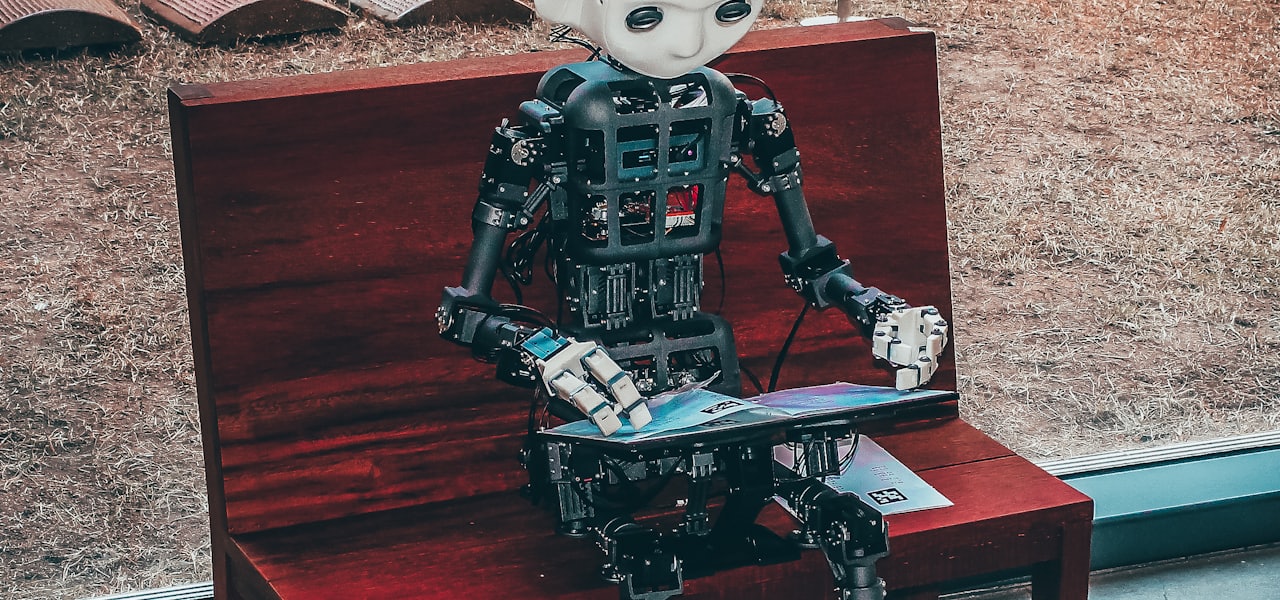
Figure AI, Inc. is an American robotics company developing humanoid robots that operate via artificial intelligence. The company was founded in 2022 by Brett Adcock. As of late 2025, the company has a $39 billion valuation. Three generations of humanoid robots (Figure 01–03) have been developed, as well as two iterations of a vision-language-action model (Helix 01–02), which can control up to two robots at once. By 2026, the robots demonstrated the potential ability to perform household work and the company gained publicity when a Figure 03 appeared at a White House event. == History == Figure AI was founded in 2022 by Brett Adcock, also known for founding Archer Aviation and Vettery. That year, the company introduced its prototype, Figure 01, a bipedal robot designed for manual labor, initially targeting the logistics and warehousing sectors. The initial model utilized external cabling for easier maintenance. In May 2023, Figure AI raised $70 million from investors including Adcock, who invested $20 million, and Parkway Venture Capital. In January 2024, Figure AI announced a partnership with BMW to deploy humanoid robots in automotive manufacturing facilities. In February 2024, Figure AI secured $675 million in venture capital funding from a consortium that includes Jeff Bezos, Microsoft, Nvidia, Intel, and the startup-funding divisions of Amazon and OpenAI; the company was then valued at $2.6 billion. Figure AI also announced a partnership with OpenAI, which would build specialized artificial intelligence (AI) models for Figure AI's humanoid robots, enabling its robots to process language; the collaboration ended after a year, with Adcock stating that large language models had become a smaller problem compared to those allowing for "high rate robot control". In August 2024, the company introduced Figure 02, describing it as the next step toward deploying humanoids for industrial use. The machine has 35 degrees of freedom (DOF), while the five-fingered hands have 16 DOF and the ability to carry up to 25 kilograms (55 lb). The model is equipped with cabling integrated into the limbs, a torso-placed battery, six RGB cameras, and an onboard vision-language-action (VLA) model. It has three times the computing power (including inference AI) of the previous model, including two graphics processing units, supported by Nvidia. Microphones, speakers, and custom AI models (developed with OpenAI) enable communication with humans. In early 2025, Figure AI announced BotQ, a manufacturing facility aiming to produce 12,000 humanoids per year with the help of its own humanoid robots, and Helix, a VLA model that can control up to two robots at once. Helix enables a robot to interact with the world without extensive manual training, according to the company allowing it to pick up nearly any small household object. By April, the company issued cease-and-desist letters to at least two secondary brokers promoting its private stock without authorization. In September, a third round of financing exceeded $1 billion, raising the company's total valuation to $39 billion. Investors included Brookfield Asset Management, Intel, Macquarie Capital, Nvidia, Parkway Venture Capital, Qualcomm, Salesforce, and T-Mobile. In October 2025, Figure 03 was introduced. According to the company, its hardware and software redesign aims to create a general-purpose robot able to learn directly from humans. An upgraded camera system delivers twice the frame rate, a quarter the latency, and a 60% wider field of view, in addition to a camera in each hand. Tactile sensors in the fingertips can detect forces as little as 3 grams (0.1 oz). It incorporates soft materials and a protected battery for safety, and removable, washable textiles. It supports wireless inductive charging. In November 2025, the former head of product safety sued the company on the basis of being fired for raising the concern that the company's robots were strong enough to fracture a human skull. By early 2026, Figure 02 had been used in demonstrations showing that it could load a washing machine, sort packages, and fold laundry. That January, Helix 02 was released, expanding the AI model to the entire body to allow for functional autonomy. A Helix 02–powered Figure 02 was shown to be capable of loading and unloading a dishwasher, based on hours of motion-capture data and simulation-based machine learning. In March, U.S. First Lady Melania Trump appeared at the White House with a Figure 03, promoting the presumptive eventual ability of AI to teach children. In May 2026, Figure AI livestreamed a group of their robots processing packages nonstop for almost a week, inspiring a 10-hour competition between their robot and a human, in which the robot performed 98.5% as well as the human.
Artificial intelligence in education
Artificial intelligence in education (often abbreviated as AIEd) is a subfield of educational technology that studies how to use artificial intelligence to create learning environments. Considerations in the field include data-driven decision-making, AI ethics, data privacy and AI literacy. Concerns include the potential for cheating, over-reliance, equity of access, reduced critical thinking, and the perpetuation of misinformation and bias. == History == Efforts to integrate AI into educational contexts have often followed technological advancement in the history of artificial intelligence. In the 1960s, educators and researchers began developing computer-based instruction systems, such as PLATO, developed by the University of Illinois. In the 1970s and 1980s, intelligent tutoring systems (ITS) were being adapted for classroom instruction. The International Artificial Intelligence in Education Society was founded in 1993. Coinciding with the AI boom of the 2020s, the use of large language models in the global north has been promoted and funded by venture capital and big tech. Companies creating AI services have targeted students and educational institutions as customers. Similarly, pre-AI boom educational companies have expanded their use of AI technologies. These commercial incentives for AIEd use may be related to a potential AI bubble. In the U.S., bipartisan support of AI development in K-12 education has been expressed, but specific implementations and best practices remain contentious. == Theory == AIEd applies theory from education studies, machine learning, and related fields. A 2019 review of the previous decade of studies found that most research prioritized technological design over pedagogical integration. Ouyang and Jiao (2021) propose three paradigms for AI in education, which follow roughly from least to most learner-centered and from requiring least to most technical complexity from the AI systems: AI-directed, learner-as-recipient: AIEd systems present a pre-set curriculum based on statistical patterns that do not adjust to learner's feedback. AI-supported, learner-as-collaborator: Systems that incorporate responsiveness to learner's feedback through, for example, natural language processing, wherein AI can support knowledge construction. AI-empowered, learner-as-leader: This model seeks to position AI as a supplement to human intelligence wherein learners take agency and AI provides consistent and actionable feedback. Some scholars place AI in education within a socio-technical framework. This positions AI alongside other emerging educational technologies, such as computing, the internet, and social media. The framework of Tsao, Heinrichs and Camit (2025) draws on new materialism and posthumanism, specifically Donna Haraway's concept of sympoiesis (making-with). This perspective views learning as an entanglement of human and non-human actors (students, teachers, and AI algorithms), where knowledge is co-composed in contact zones between human context and algorithmic prediction. AI agents have been trained on biased datasets, and thus continue to perpetuate societal biases. Since LLMs were created to produce human-like text, algorithmic bias can be introduced and reproduced. AI's data processing and monitoring reinforce neoliberal approaches to education rather than addressing inequalities. == Applications == Uses of generative AI chatbots in education have included assessment and feedback, machine translations, proof-reading exam question generation and copy editing, or as virtual assistants. Emotional AI in education is the study and development of systems that can detect learners' emotions or provide emotional support in learning. == Usage == === Schools and educators === Following the release of ChatGPT in November 2022, some schools and large school districts blocked access to the site and issued warnings that the use of such tools would be seen as cheating. Governmental and non-governmental organizations such as UNESCO, Article 4 of the European Union's AI Act, and the U.S. Department of Education have published reports advocating for specific AIEd approaches. National higher-education bodies have also published guidance on generative AI, including Ireland's Higher Education Authority, which issued a policy framework for higher education teaching and learning in December 2025. In 2024, UNESCO released updated global guidance for generative AI in education, emphasizing ethical use, teacher training, and data protection to ensure responsible integration of AI tools in learning environments. According to Taso (2025), policy implementation in higher education is interpreted and enacted differently by various organizations. These decentralized policies can lead to inconsistent enforcement and confusion among students regarding what constitutes acceptable use, with the burden of ethical navigation falling on individual teachers and students. AI integration in classrooms has created new forms of invisible labour for educators, who must navigate ambiguous policies, redesign assessments to be AI-resilient, and adjudicate potential academic integrity violations. The use of AI detection tools has also been criticised for creating an adversarial relationship between students and institutions, where students may be falsely accused of misconduct based on probabilistic software. AIEd advocates say that efforts should be made towards increasing global accessibility and training educators to serve underprivileged areas. === Students === Reliance on generative AI has been linked with reduced academic self-esteem and performance, and heightened learned helplessness. Algorithm errors and hallucinations are common flaws in AI agents, making them less trustworthy and reliable. According to a 2025 survey from Inside Higher Ed, 85% of higher education students use generative AI technology in some way, with 25% using AI to complete assignments for them. The most common reason cited for using AI to cheat was pressure to get high grades. 97% of students wanted some form of action from schools on the threat to academic integrity caused by AI, with the most popular options being clearer policies and more education about ethical uses of AI. In September 2025, The Atlantic published an op-ed from a high school senior arguing that the normalization of AI cheating was eroding critical thinking, academic integrity, creativity, and the shared student experience.
DexNet
Dex-net is a robotic. It uses a Grasp Quality Convolutional Neural Network to learn how to grasp unusually shaped objects. == History == Dex-net was developed by University of California, Berkeley professor Ken Goldberg and graduate student Jeff Mahler. == Design == Dex-net includes a high-resolution 3-D sensor and two arms, each controlled by a different neural network. One arm is equipped with a conventional robot gripper and another with a suction system. The robot’s software scans an object and then asks both neural networks to decide, on the fly, whether to grab or suck a particular object. It runs on an off-the-shelf industrial machine made by Swiss robotics company ABB. The software learns by attempting to pick up objects in a virtual environment. Dex-Net can generalize from an object it has seen before to a new one. The robot can "nudge" such virtual objects to examine if it is unsure how to grasp them. The trial data set was 6.7 million point clouds, grasps and analytic grasp metrics generated from thousands of 3D models. Grasps are defined as a gripper's planar position, angle and depth relative to an RGB-D sensor. == Mean picks per hour == A metric called mean picks per hour (MPPH) is calculated by multiplying the average time per pick and the average probability of success for a specific set of objects. The new metric allows labs working on picking robots to compare their results. Humans are capable of between 400 and 600 MPPH. In a contest organized by Amazon recently, the best robots were capable of between 70 and 95. Dex-net has achieved 200 to 300.